Pablander


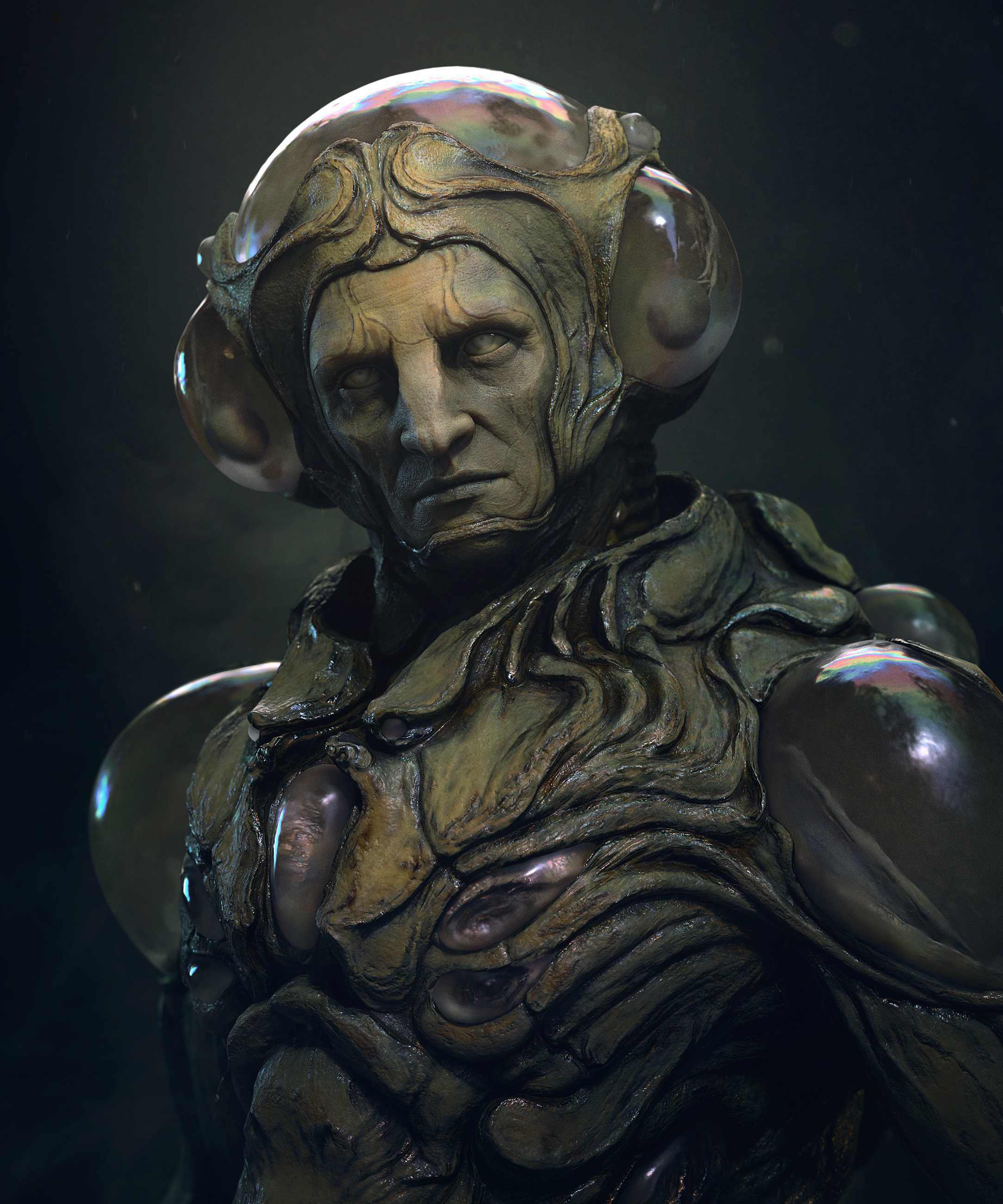
Karnax was developed during a live workshop inside The Extra Mile course, evolving across the 8 live sessions from early concept sketches into a fully realised character together with the TEM students. The goal was to demonstrate how a strong narrative foundation can directly inform design decisions, anatomy, surface detail, and overall presence. Throughout the process, we explored how story, biomechanics, and visual language can grow together, using Karnax as a case study to show how a character can emerge organically when concept, sculpting, and storytelling are treated as a single, unified workflow.


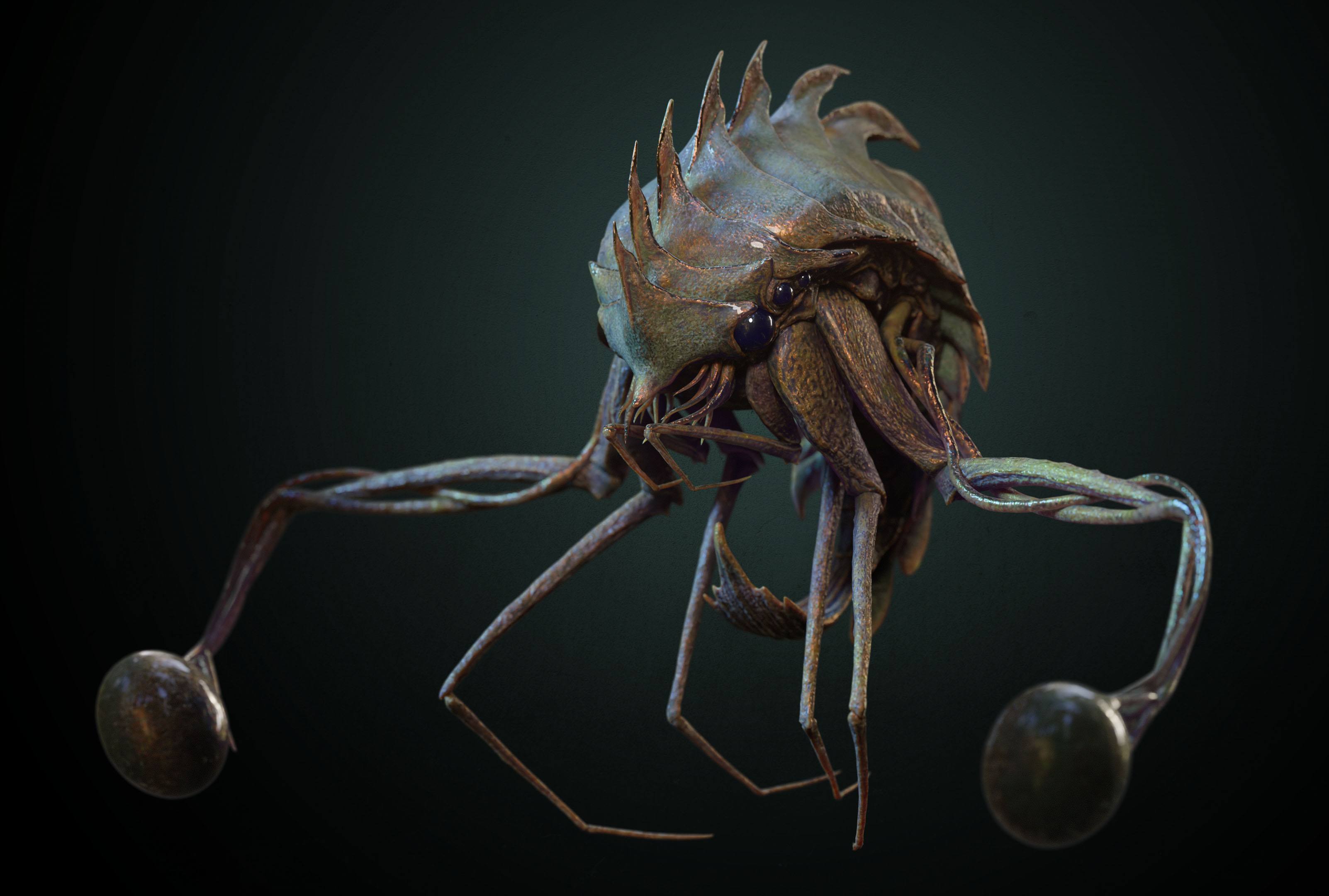
To the untrained eye, Karnax appears to be an eerie, almost grotesque humanoid wrapped in alien musculature, an unnerving blend of insectoid fluidity and humanoid mimicry. Its head, encased in a glossy, organic bubble, houses the true Karnax: a delicate, cephalopod-like organism, no larger than a grapefruit. This is not a parasite, but the pilot.
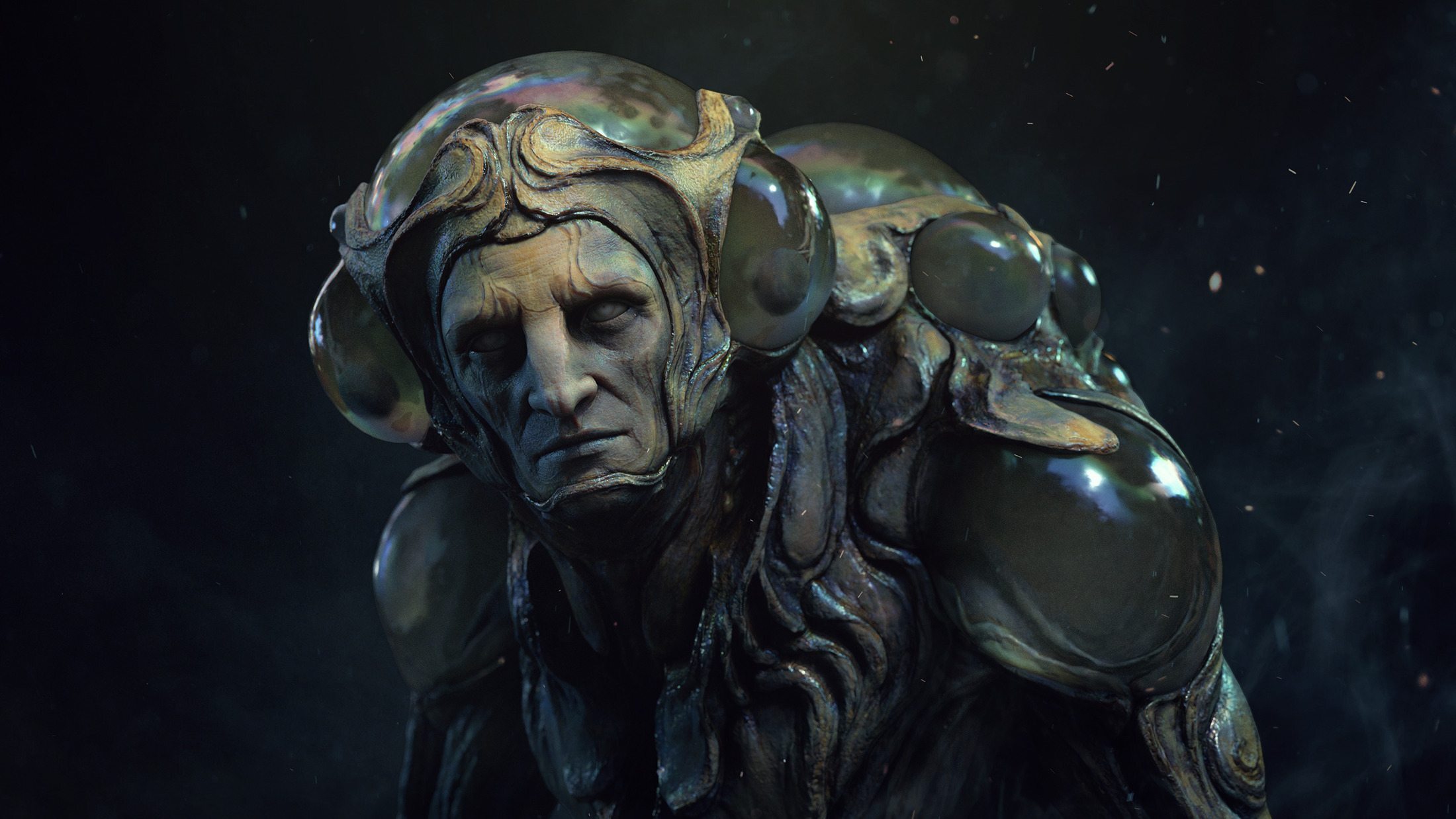
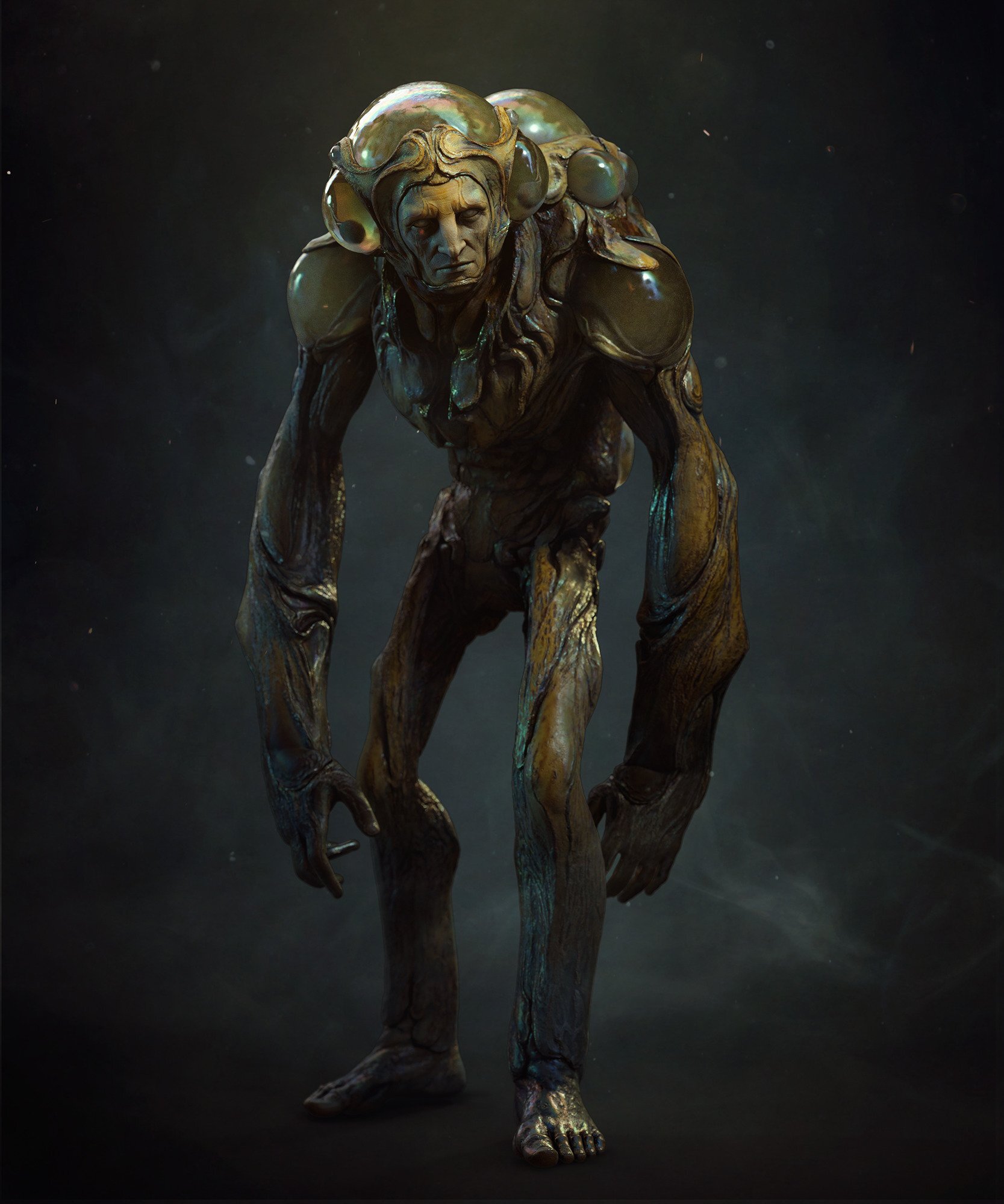
Karnax is a Seldari Transmind, a rare species whose biology and consciousness are completely decoupled from traditional lifespan limits. The Seldari organism that lives inside the cranial pod has a natural lifespan of 7 Earth days. But unlike most lifeforms, it has mastered consciousness transference, allowing it to leap from host to host across generations of synthetic-organic shells, effectively achieving a form of immortality.
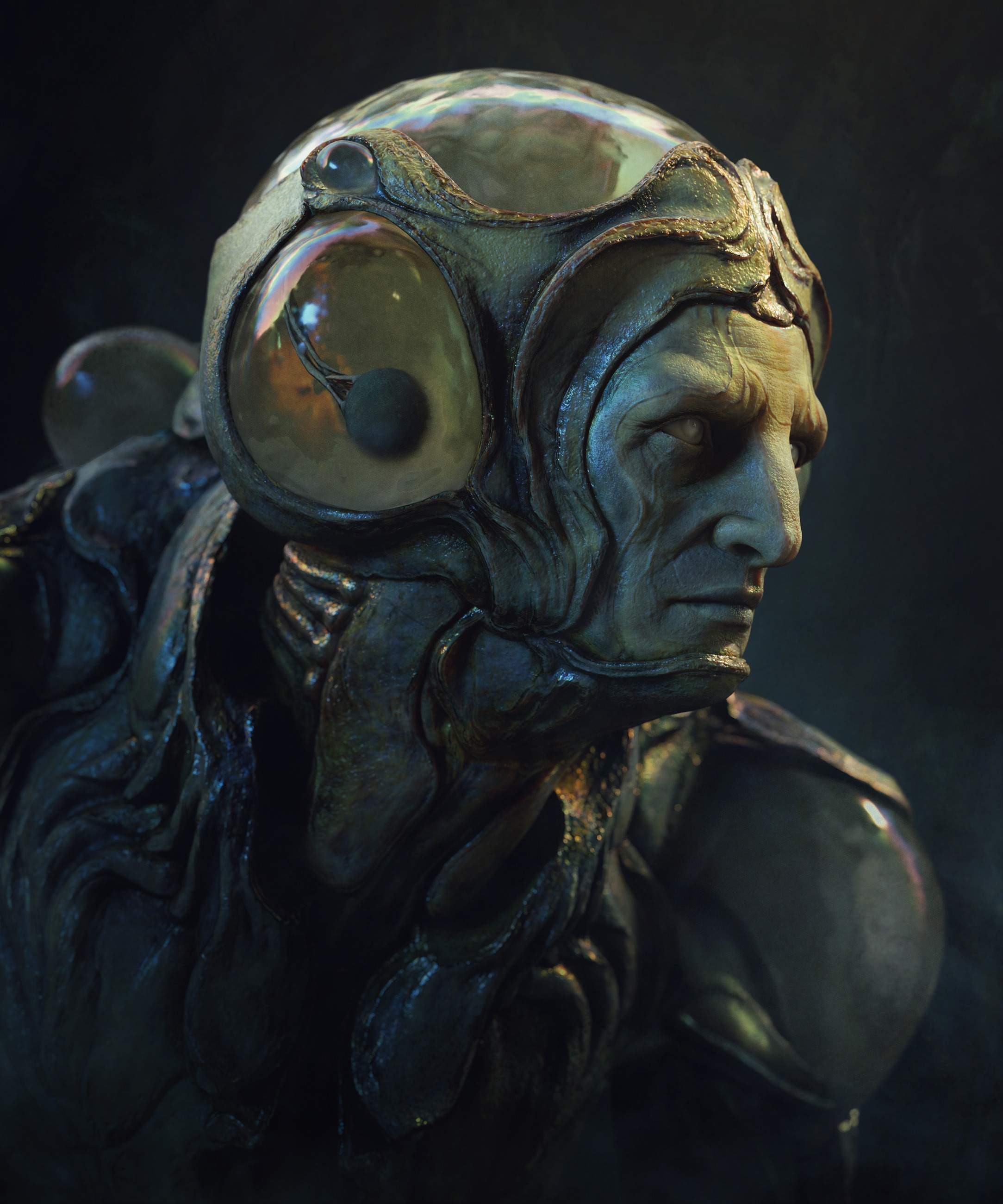
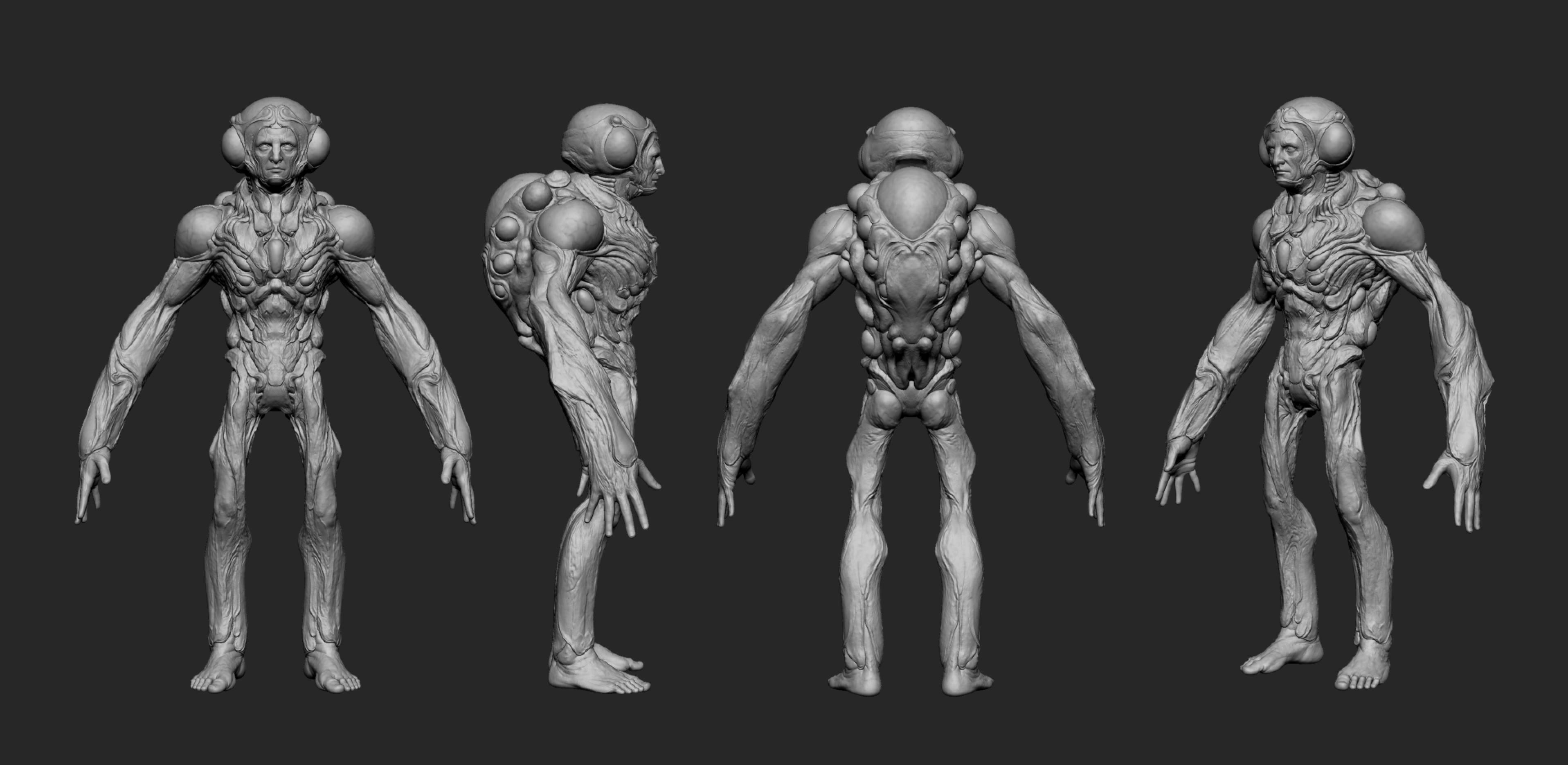
The humanoid body you see is called a Gestalt Vessel, a semi-organic exosuit grown around a skeletal subframe. Embedded within the upper thorax and shoulders are multiple embryonic growth pods, each containing a dormant, genetically tailored Seldari larvae. When the current pilot nears its end, Karnax begins a ritual-like process of "resource reallocation": diverting internal fluids, heat, and neural stimulants to accelerate the growth of one embryo, usually selected based on environmental needs or emotional states. Within hours, the consciousness migrates, memories intact, identity preserved.

Despite its unsettling appearance and jerky, uncanny movements (the result of interpreting human gestures through thousands of recorded samples), Karnax is not a malevolent being. In fact, it is considered one of the Ancient Custodians.
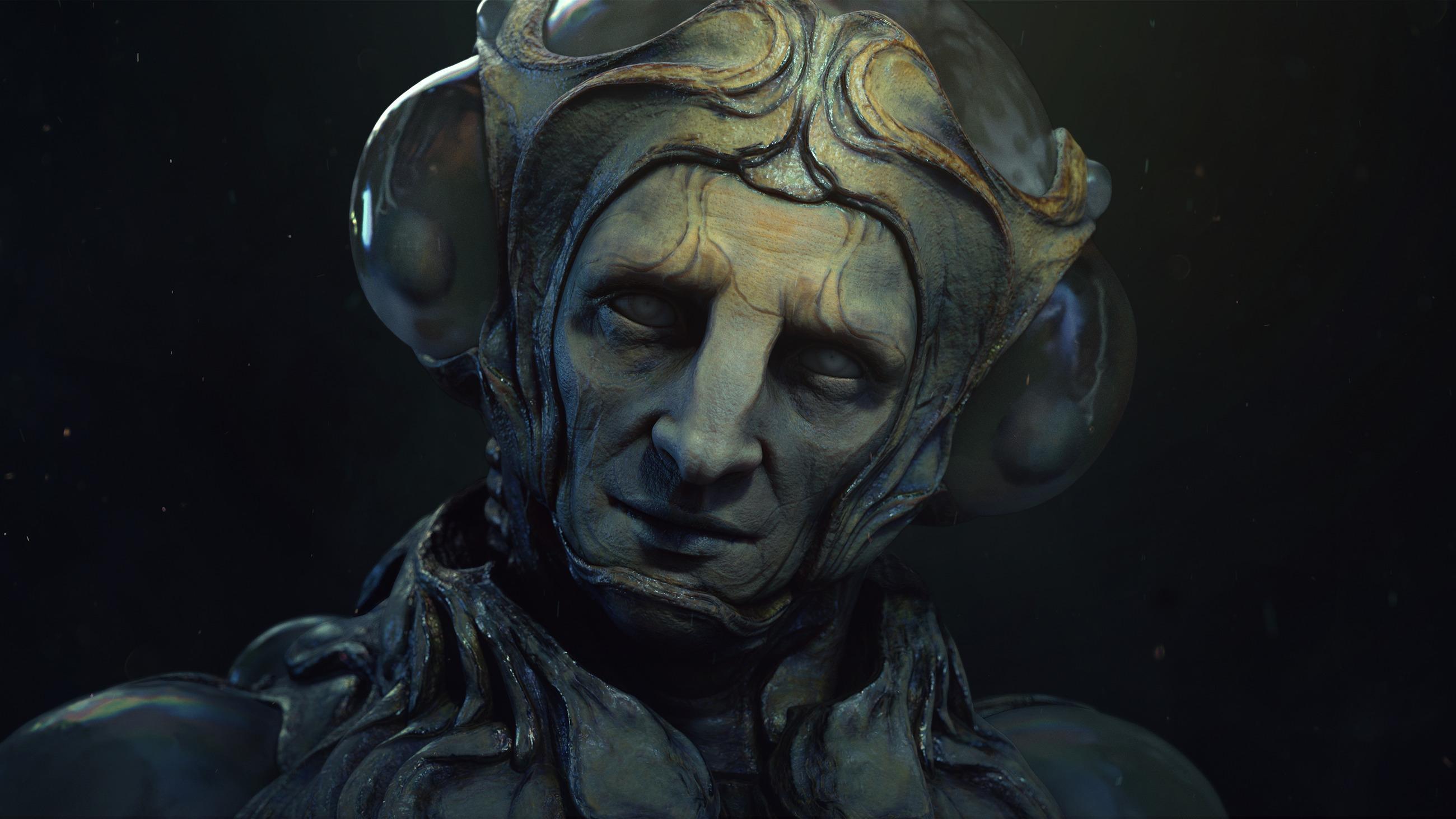
Its presence is often misunderstood. With no facial expressions to read, and an imperfect mimicry of human posture, Karnax's attempts at empathy can feel like a cruel mockery. A smile becomes a twitch. A gesture of comfort feels like a threat. But beneath the surface lies a gentle entity, patient, wise, and deeply curious.
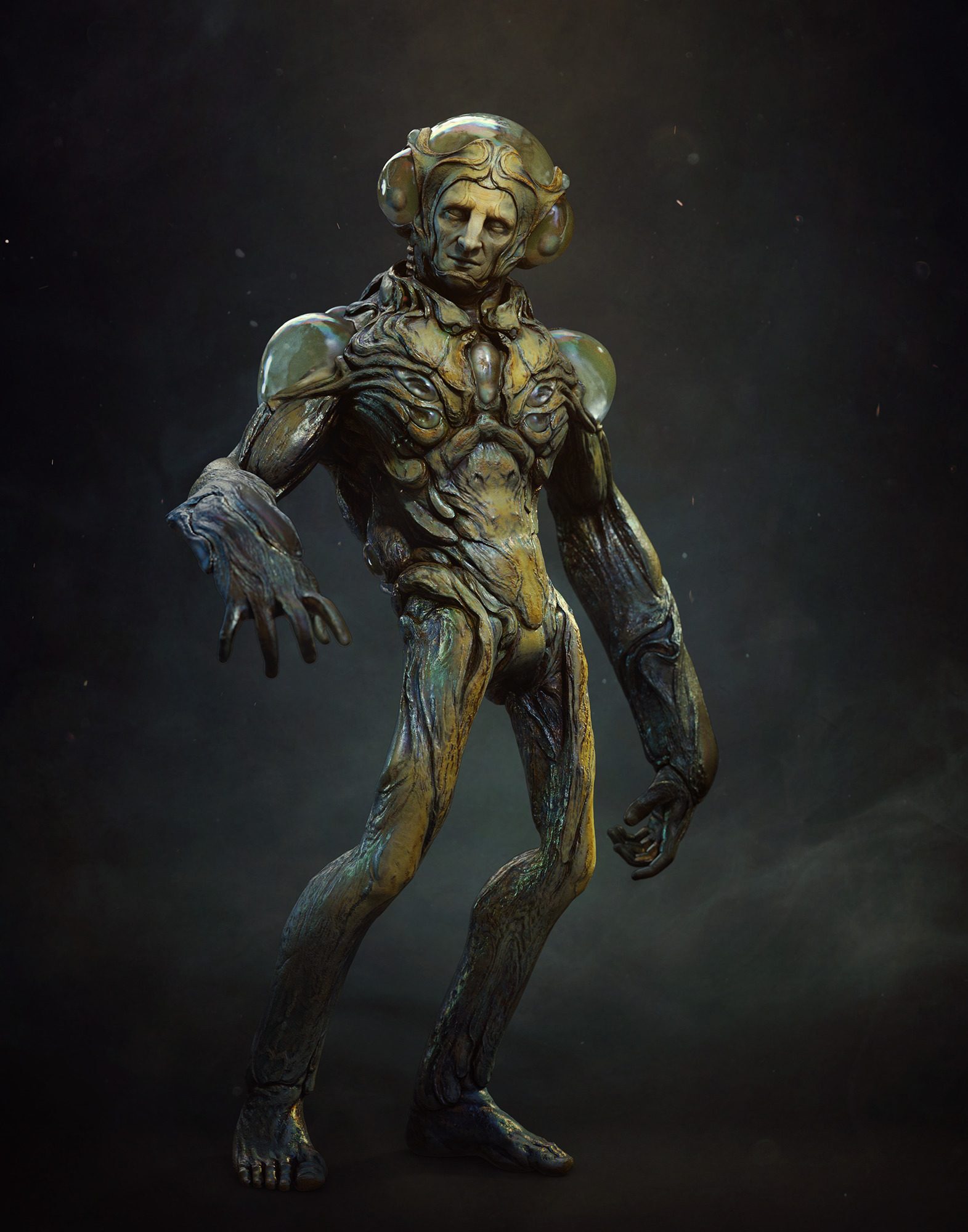
Karnax has existed across 392 cycles, bearing witness to the rise and fall of interstellar empires. It has walked on gas giants using pressure-suits grown from jellyfish DNA, and it has stood in courtrooms as a neutral advisor during the collapse of the Binary Peace Accords. Its knowledge of xeno-medicine, quantum anthropology, and linguistic decay makes it a valued ally to scientists and explorers like Kudu.
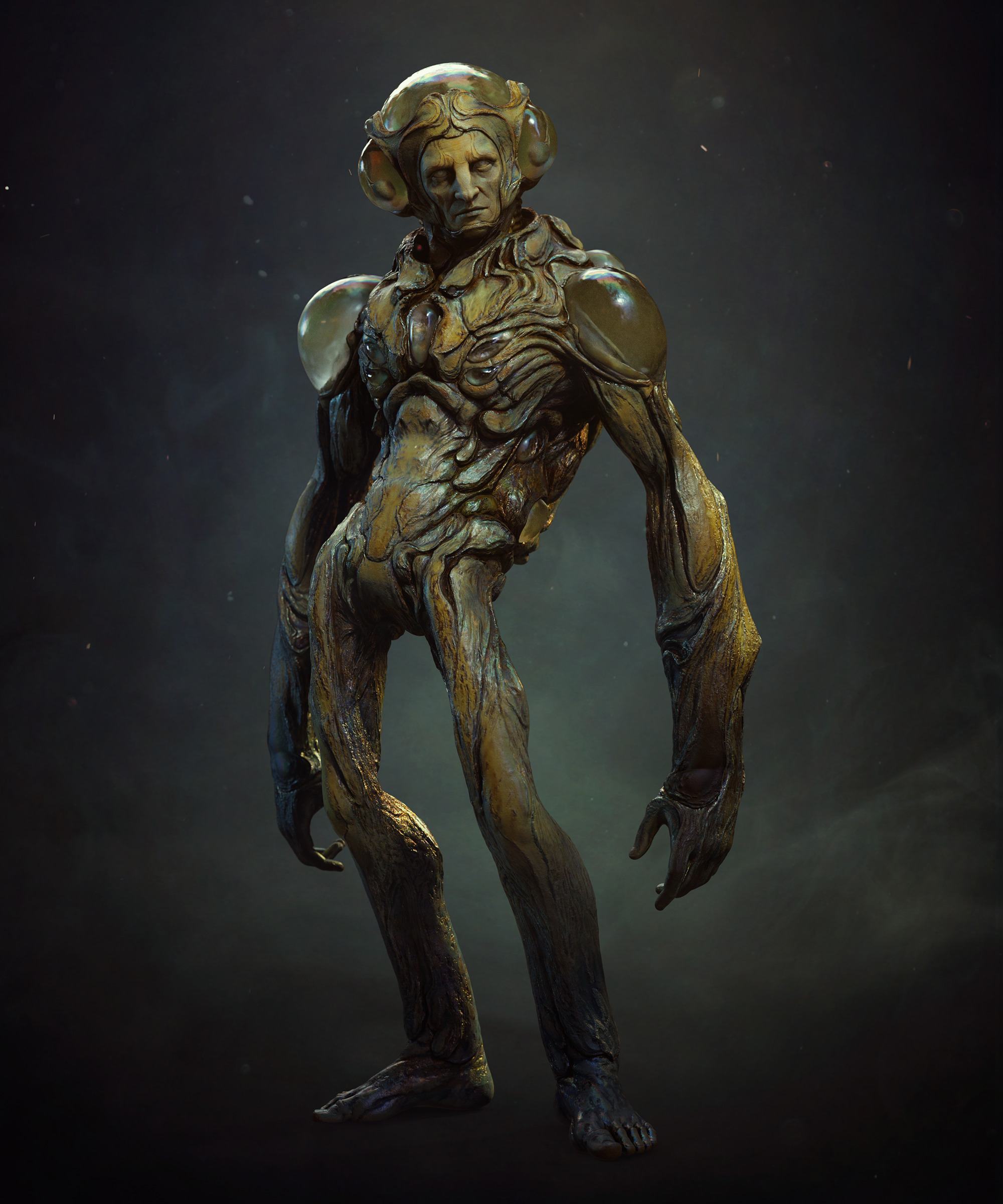
Karnax’s mission is as an Envoy of Continuity, an observer who catalog civilizations on the brink of extinction, offering silent counsel or active intervention when needed. It never imposes, only suggests. It never rules, only teaches.
Some fear it. Others revere it. But all agree: Karnax endures.
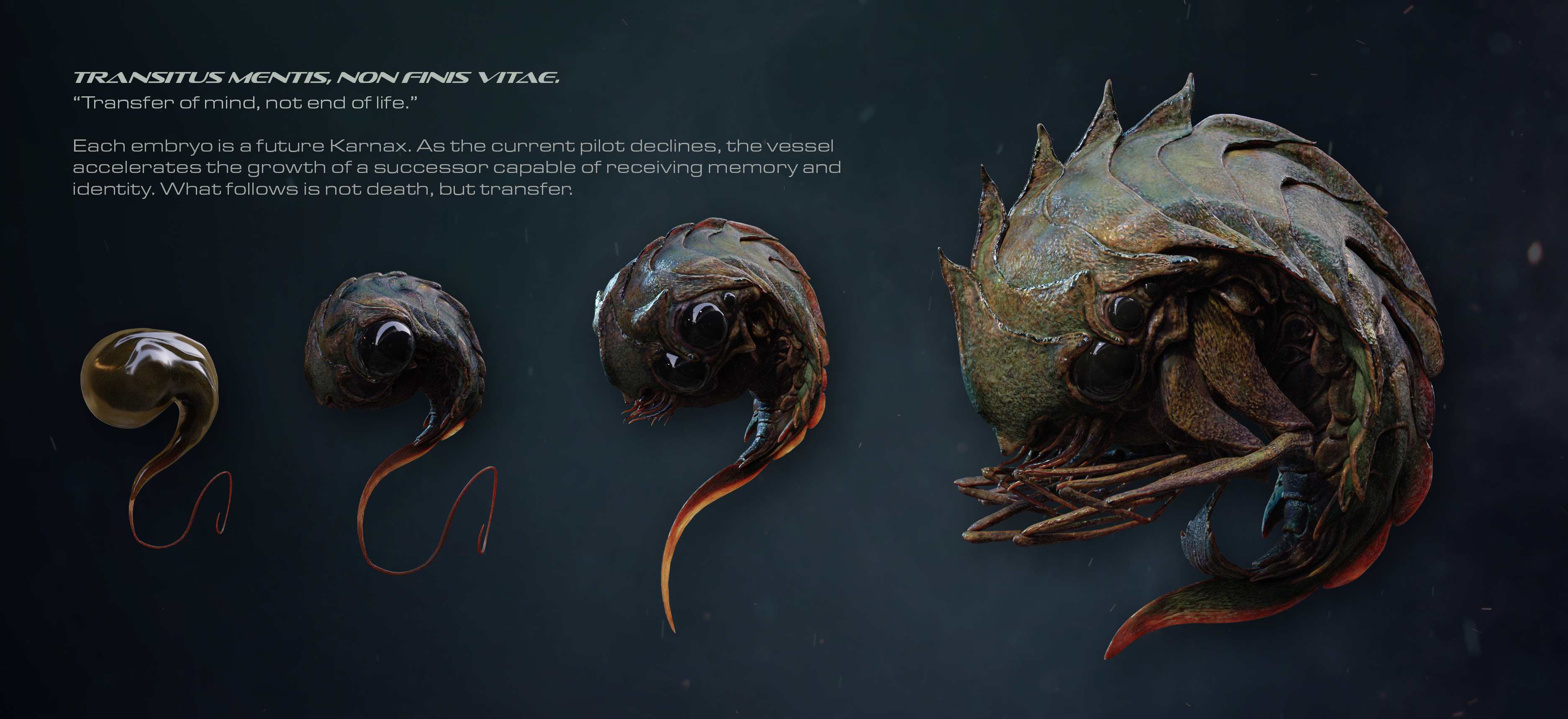
In terms of the process, I started with a very chaotic sketch made of abstract shapes, refining it bit by bit until an initial idea of Karnax began to emerge. This stage was less about details and more about discovering an interesting silhouette and overall presence.
Here is part of the refinement process from that rough sketch into something more readable and structured.
Final high resolution sculpt created in ZBrush, where the anatomical language of the Gestalt Vessel and the relationship with the internal pilot were refined together. Most of the design decisions around posture, surface flow, and silhouette were resolved at this stage before moving into rendering.
The Seldari organism sits inside the cranial pod, positioning its ‘visual receptor appendages’ to either side of the head, loosely mimicking the placement of mantis-like eyes. This allowed the creature to “see” through the vessel while maintaining the idea that the true being is hidden within.

Closeup of the Seldari pilot sculpt. Here I wanted to create something fragile and intelligent that contrasts with the heavier, armored language of the vessel, reinforcing the idea of a delicate lifeform controlling a much larger body.

I took the renders into compositing to refine the atmosphere, contrast, and colour balance. Subtle grading and lighting adjustments helped push the mood and enhance the organic feel of the materials without overpowering the sculpted detail.